THR Feeling Discouraged

when I read about all these folks talking about walking unassisted after 2 or 3 weeks and no pain.
Having been through 2 hip replacements, I worry about these people who give up the walking aids so early.

What happens to them at the 3 month mark? Are they limping because of poor gait? Are they suffering with back pain because their body isn't properly aligned? My surgical team warns every patient not to push at the beginning, because the folks who do often end up with problems down the road.

What you are experiencing is what the majority of us experience. Try not to worry.
 
Supporting prior good advice...

This is what I've come to think of as the Great Structural Reset.

Our arthritis-affected weight bearing joint, over time, creates a lot of structural changes as the body tries to compensate. Some muscles and tendons lengthen and stretch while their counterparts contract and tighten. This can happen slowly and below our level of consciousness even as these forces start tugging at bones, skewing our pelvis, our posture, our gait.

All at once in surgery everything is essentially reset by the surgeon. Part of recovering from a hip or knee replacement, besides the actual healing, is a re-modeling of our structure to adapt to our new improved structure.
When I faced my hip replacement surgery, this quote became more than words on a page—it became a lifeline. Each day brought its own challenges: the uncertainty before the operation, the slow steps of recovery, the moments when pain seemed louder than progress. But holding onto this reminder helped me see beyond the struggle.
 
Had my 6 week follow-up yesterday. I had questions for my surgeon about the thigh, knee and shin pain I have been having when walking, and if it was normal at this stage. My surgeon is very (overly) confident in his surgeries. He can be quite cocky at times, but not in a mean way. He always gives me a hug when I am leaving, lol. When I brought up the pain I was having and told him I just moved to cane 2 days ago (and not full time), his first remark was "it sounds like your back". Then he said you might have a glute tear on the other side. I told him I was not having any pain or discomfort in the un-operated side. He just seemed to dismiss that the issues were from my surgery. He never said what I was experiencing was common and would take time to clear up.
When I told him about strong pain when I tried to lift my leg straight up when lying down at PT, he said "stop doing that!". Instead, he told me to stand up from seated position without using my hands to push up, and to do it 100 times a day. He said that is all I need and it will take care of the issues (glutes, thigh and core). Just for reference, I am 69 years old and not a very active person.
He did at the end say work on tightening glutes and the standing from chair exercises, and he would see me in 6 weeks.
I then asked about continuing precautions (90 degrees, crossing legs, pivoting) and he brushed it off. He said go ahead right now and cross you leg. I said no. He said you don't have precautions. You can bend down and pick things up from floor as long as you bend your knees, you don't need pillow between legs if sleeping on side - basically any of the precautions I have read about and even given by their surgical center after my surgery. I asked what about dislocation risks. His response was "dislocations do happen, but I have only had one in 17 years. He then repeated that three times in a row with a smile. I also questioned about it being okay to cross operated leg past midline and he looked at me like I was nuts. He said there is no issue with moving you leg across your body. PT and what I have read said not to do that due to dislocation risks. He said if I slipped and my leg went backwards in a unusual twisted like position, that could dislocate....
I do believe he is a good surgeon, but I don't think we communicate well. I always leave his office confused about what was said. People always say listen to your surgeon, and I am trying to, but he is so confident in his abilities and the way he places the implant that he seems to somewhat dismiss any pain/issues I bring up or concerns of following precautions. I am now wondering if it's me overthinking everything, but his answers are contrary to everything I have read or heard.
Asking for opinions on this.
 
It sounds like you are doing well for 6 weeks. I'm at 9 weeks today and still using the cane. I was told at 6 weeks not to lift my leg straight up while lying down as well. My surgeon is very conservative and old school (he's in his 60's). He believes in posterior approach and hip precautions. He said the new/younger Physical Therapists don't believe in hip precautions and I should not to listen to the P.T. in regard to my precautions. Each surgeon has his own views, for sure. Mine just keeps saying not to do things that hurt. If it hurts, don't do it. Walking is best and limping is bad. Use the cane if I am still limping (which I am). Squats are best exercise for butt muscles which we need to stand up and sit down. My P.T. has me do 3 sets of 10. I also cannot move my leg side to side and definitely not across the other foot/leg. It's too stiff from the surgery. We were cut open and manipulated. Things are inflamed inside and yes, it's going to hurt.

I was just released on Thursday to start bending past 90 degrees and to do some light stretching so I can start reaching my toes. He reminded me that the tissue inside is still healing and we don't need to be ripping it and forcing things.

I was given 2 exercises to do this week (besides walking). They are squats and lying on my back in the bed, knee bent, towel behind knee, and gently pull towards chest for gentle stretch. I can feel it in my glute muscle which is very very tight.

When I have pain, I know it’s time to use Advil and/or Tylenol and get the ice pack out. You're not done healing yet. Don't be so hard on yourself and don't expect to be "all better" at 6 weeks or even 8 weeks. I'm sure the ladies who run this group will tell you what to expect after their years of experience with these surgeries.

I hope you can relax and work your way through this recovery process.
 
Hi Indiesmom,
At only six weeks into the healing process, after the controlled trauma of THR it is not unusual to be dealing with discomfort / pain. Muscles and soft tissues are healing and your gait is changing, once again, as your body adjusts to the prosthetic. As long as the pain isn't worsening or sharp to the point it interferes with movement I wouldn't stress over it. My knee was quite bothersome post op also and I attribute it to the aggressive way the knee is manipulated during the dislocation process. Ice your knee right along with any other parts of your leg that are hurting. I agree with your OS in not forcing movement that's causing you pain.

Do keep in mind, as mentioned here before that it is not necessary to exercise your injured hip to promote healing. The trauma sustained through surgery will heal on its own. Try to be patient, taking it slow, so you don't end up struggling with pain and setbacks stalling the healing process. The best therapy for recovery is walking, but not to excess. Start slowly increasing time and distance incrementally in an effort not to overdo it.

I didn't have any restrictions, but was cautioned to move thoughtfully and slowly and if anything hurt, stop. On my own, I did follow a few precautions that I read other THR members were following, because I felt it couldn't hurt. I don't blame you for not crossing your leg as he suggested, I wouldn't have either. I still don't, eight years later, simply because it's become a habit not to. To this day, while side sleeping, I use a pillow between my legs, an inexpensive Body Pillow. It's comfortable, keeps my hips level and it's good for spinal alignment. So I would advise you do use one if it will make you more comfortable.

Dislocations are rare and you sound very conscientious about the healing process, so please try not to worry about that happening. As you continue to heal, the risk decreases significantly over time.
Use the golfers reach to pick up objects from the floor.

1765912785008.webp

I don't believe you're overthinking everything, especially given the fact that you don't feel the two of you communicate well. There's no reason why you can't follow a lot of his guidance, along with applying what others have found helpful during their recovery and using your own judgement and common sense, which it seems you're doing already. You're doing well and heading in the right direction. Healing can be a year long process and you're in the very early days considering that.

Happy Tuesday, I hope you have a good week! :)
@Indiesmom
 
I was very concerned about. Dislocating after my THR. I have a friend that dislocated a couple of times. Once tying her shoes & another working in her garden. So that put me in a very conservative approach to my recovery.
I soon realized I am my own person & not her and learned to listen to my body’s cues. Yes, if it hurts don’t do it. I’d have days where I would make a mental list in my head of chores or errands I wanted to get done. Some days I might make it halfway through the list and I’d have to lay on the couch and ice and take an hour break. I was on my walker for several months before I was able to transition to the cane. But that was me. We are individuals & each of us recovers differently. This is not only a physical recovery it’s a mental one as well. Ups & downs. Then one day you will do something you couldn’t do a week ago & surprise yourself! These are the “milestone” moments we share here. And they will come for you like they happen for many of us. I’d say after 6 months I was doing well. At one year much better. And I’m now in Year 3 and I think it continues to get better.
I’m sure your OS feels you are worrying for no reason. And that makes you feel like he’s not listening . My advice is continue to educate yourself and listen to your body. You are your greatest advocate.
 
6 weeks, the journey has just begun. I know you don't want to hear that but we'll all tell you that you have a least a year or more of recovery in front of you.
Standing from a sitting position with no hands is very good in recovery once you're recovered enough. just lifting our body's weight is plenty, no need for straps, bands or weights. Deep knee bends or deep squats aren't good so standing from the chair and doing a couple of half squats before walking away is good practice. 100 a day is a good goal for the future, start slow and work your way up. Simple chair Yoga helped me a lot gain strength and flexibility. Don't force a stretch.
Dislocation is real, I know some that have done it. Understand what posterior approach meant and avoid pivoting your leg in that direction. It took some time but I can cross my legs sitting in a chair or lying down, I mean figure style. I never could sit crosslegged on the floor so I don't push it when I cross my legs.
 
he seems to somewhat dismiss any pain/issues I bring up
Many of our members have reported similar interactions with their surgeons. What we have to remember is that these surgeons are bone doctors and so they focus on the bone/implant piece of puzzle. They aren't really worried about the impact the surgery has on the soft tissues -- to them, it's expected and it will resolve with time.
That's frustrating for us as patients, because it's the soft tissue pain that plagues us for months.

I know that six weeks seems like a long time, but you are still very early in this recovery. I will reach my 6-month anniversary in a few days and can honestly say that it has only been in the past few weeks that I've been able to get through the day without noticing my hip/leg/back! You will get there too; it just takes time.
 
Hi Indiesmom :wave:
Stopping by to say Hi and wish you both a Happy Two Month Anniversary and Best Wishes for 2026!
I hope the past two weeks have brought you some comfort.
Please stay in touch, we're here for you! I'd like to thank you for sharing your THR recovery with all. :)
@Indiesmom
:happy-new-year-smiley-emoticon-4:
 
I am still using a cane and occasionally the walker. I will be 10 weeks post op this Friday. If I try and walk with no aids, my operated leg in painful in the thigh mainly, and some in the knee. I cannot walk unaided without a very bad limp, so I don't do it. To bear full weight on that leg is painful and does not feel stable. Also, I still cannot lift my leg straight up when lying without bad groin pain, so not doing that either. PT says my hip flexors are the issue on that.

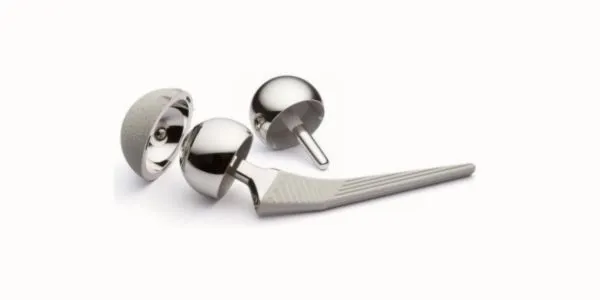
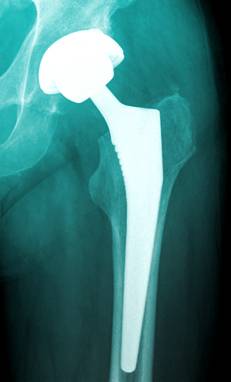
One thing I want to run by folks. My surgeon did not cement my implant. He did the press and fit approach (cementless). In reading about the difference in cemented vs uncemented, most of what I read says press and fit is used on younger/active people, and those that have strong bones. I am 69 years old and have no idea what shape my bones are in. I also read that press and fit does more hammering to get it in place and can take longer to recover. What I read makes it sound like the surgeon really needs to know what he is doing on uncemented to hammer just hard and long enough to not to cause any fractures. Articles say they actually go by sound to know when to stop hammering. Does anyone know if this is true? I am wondering why my surgeon chose to not cement at my age. My PT was a bit surprised when I told him yesterday that my implant was not cemented.
 
I was still using a walker at 10 weeks, and was unable to lift my leg without significant groin pain until around 6 months. It is getting better with time. Because of back pain I use a walker in the community for long distances (shopping).
I was 74 at the time of my surgery and have a press fit implant. I think they decide based on the condition of the persons bone and health, not age.
You might want to call your surgeons office and let them know you are having thigh pain, are unable to walk unaided even short distances, and your leg does not feel stable.
 
Hi @Indiesmom. It sounds like you are concerned about the possibility of a fracture. Did your surgeon do X-rays at your post-op visit? If so, a fracture would likely be seen in that imaging. Can you check the report to see if there is any mention of it?

I'd be very interested to read that article about cemented vs. uncemented. Both of my implants are uncemented.
I'm your age (actually, a couple years older) and had good outcomes. Would you mind sharing the source?
 
Mine aren't cemented, second one has a lip that stops it from being driven in too far. Both of my cups have 2 screws in each one.
 
We’d have to see links to the articles you’ve been reading to be able to properly address what they are saying. Remember, you can read a whole spectrum of things on the internet, so sometimes it’s difficult to tell what is correct or even current information. It’s why we encourage our members to ask their questions here. We’ve seen well over 40,000 people through their recoveries over the years and we do know a thing or two….… :heehee: . So I’m glad you asked about this.

The thought behind the “Cementless implants for younger, more active patients” originated years ago with the idea that a revision would probably be needed at some point in time for these folks and it would be easier to remove a press fit implant than a cemented one. But today’s hips are estimated to last thirty years or even more. We won’t know for sure how long because not enough time has passed with the newer implant technology and surgical techniques to be able to say. Assuming you didn’t have an infection or a major fall along the way, it’s quite possible your new joint will outlive you.

Because it is true that removing a press fit implant can be easier than a cemented one, a majority of surgeons today use that method for primary surgeries. Cemented implants are more likely to be used when the patient has problems (such as osteoporosis, infection, or other issues) that require a revision.

Trust me that your surgeon knows the state of your bones. He can tell this from visual observation once he has access to your hip joint and he chooses the best implant for your specific situation. Since you’re over 65 you should be getting a bone density scan if for no other reason than to establish a baseline for your bone health. You could ask about what your bones looked like the next time you meet with your surgeon.

There is tremendous skill required for both cemented and press fit implants. One is not really easier than the other….the surgical techniques are just different. There is no difference in recovery between the two methods.

But if you’re having pain when you fully weight bear on your new hip, you do want to let your surgeon know this. It’s not uncommon to still need walking aids at this point. You don’t measure the stages of recovery by time. Your body heals on its own schedule and it’s your job to listen to the signals you receive and react accordingly. So, if you’re limping when trying to walk, you need to continue using whatever walking aid gives you the best and most normal gait.
 
Hi Benne68

You asked for articles I read. Below are just some of the articles I read. What got me trying to research it was the simple (and mostly not reliable) AI response I got when I typed in "is cemented or uncemented hip replacements better for people over 65". I know that the AI responses are not something to just accept, but that is what started me down the rabbit hole search, because it said uncemented is best for young/healthy and active people.
I am just so depressed with not being able to put enough weight on my operated leg to walk unassisted (even for short distances around the house) at 9 weeks post op. I began questioning what could be contributing to this. I know I am not pushing it and being overly careful.
I was told my surgeon would have access to my medical history. In 2024 I had a DEXA scan and have osteopenia. The right hip (the one operated on) was the worst. Also, the few people I know personally, that were around my age, that had replacements within the past 5 years all had cemented. I then started worrying he did not know about this DEXA results.
I do plan on discussing all this with my surgeon in my next appointment in 3 weeks. I was just reaching out on this forum to see if others had experience or knowledge on this.


Thanks for providing these article links, @Indiesmom. We'll take a look at them.

I hope my personal story will help mitigate your concerns about this a little: I was also diagnosed with osteopenia prior to my first THR. My surgeon and I discussed it prior to the surgery because I was afraid it might compromise my recovery. He indicated that, while there was a slightly greater risk of fracture during the procedure, his experience has been that the long-term outcome for mobility is better for uncemented implants.

Sure enough, during that first procedure, I did sustain a hairline fracture -- which was repaired immediately in the OR. It did not impact my recovery in any way. So, when it was time for my second THR last year (six years later), we agree to go the same route. This recovery has also gone well. (If it is any reassurance, my surgeries were done by Hospital for Special Surgery, which has been ranked the world leader in orthopedics for the past two decades).

As others have said, needing a cane or other walking aid to prevent limping at your stage of recovery is not at all uncommon. Many of us use them for months until we are confident we can walk without limping. However, if you are unable to weight-bear, even with that support, I encourage you to speak with your surgeon to find out if something else might be going on.

 
Hi Indiesmom,
Thanks for the update. I'm sorry you're struggling, :console2: I can imagine it's very discouraging. I wonder if you can get an earlier appointment with your OS if you talk to a member of his care team sharing your concerns? It may be worth a try and hopefully get you some answers or reassurance sooner...
Wishing for your comfort.
@Indiesmom
 
Thanks for providing these article links, @Indiesmom. We'll take a look at them.

I hope my personal story will help mitigate your concerns about this a little: I was also diagnosed with osteopenia prior to my first THR. My surgeon and I discussed it prior to the surgery because I was afraid it might compromise my recovery. He indicated that, while there was a slightly greater risk of fracture during the procedure, his experience has been that the long-term outcome for mobility is better for uncemented implants.

Sure enough, during that first procedure, I did sustain a hairline fracture -- which was repaired immediately in the OR. It did not impact my recovery in any way. So, when it was time for my second THR last year (six years later), we agree to go the same route. This recovery has also gone well. (If it is any reassurance, my surgeries were done by Hospital for Special Surgery, which has been ranked the world leader in orthopedics for the past two decades).

As others have said, needing a cane or other walking aid to prevent limping at your stage of recovery is not at all uncommon. Many of us use them for months until we are confident we can walk without limping. However, if you are unable to weight-bear, even with that support, I encourage you to speak with your surgeon to find out if something else might be going on.

I really appreciate your encouraging words and sharing your personal story. Although I believe I have a very skilled surgeon, he is not good at communication unless you ask a specific question. I really was not given any information on what to expect in recovery (until after the surgery at the surgery center), details on the implant or any discussions/questions about my medical history. In hindsight, I realize I should have asked more questions, but I honestly didn't know what to ask. I got most of my info on what to expect online. Although my surgeon is probably very good, I may look for another if I decide to do my other hip; as I was told I needed both replaced. It's like he is so confident in his work that he just assumes you will be fine and seemed taken back and surprised when I told him at 6 week follow-up about the pain and could not walk un assisted. His response was it was likely my back or maybe a glute tear on the other side. Anyway, thanks for the response, and I will get through this.
 
I really was not given any information on what to expect in recovery (until after the surgery at the surgery center), details on the implant or any discussions/questions about my medical history.
We do deserve more thorough information before surgery, including what recovery looks like. I didn't learn much beforehand either, other than what I read online or learned here through others that walked ahead of me.

My understanding is that our medical history is reviewed as part of our pre-op physical and if there is anything concerning or needing further discussion it is addressed before your surgery.

While there is some pre-op planning before surgery, like the type of implant (brand), general size and cemented vs un-cemented, the exact implant components are chosen in the OR, based on bone quality and fit, to name a few. You can obtain copies of your office visit notes as well as surgery notes, which I did, via signature in my OS's office at a follow up visit and they were mailed to me within days. I found it interesting to read through all of the information I received. Possibly you'll get further with your PCP at this time since your OS seems rather dismissive of your concerns? May be worth a try. I wish you the best, Indiesmom.
 
We do offer suggestions for pre-op questions for our Insiders Club members like yourself. Please read this thread on Choosing a Surgeon and Prosthesis from our BoneSmart Library if you decide to consult with additional surgeons. I hope this helps you as you do have the right (plus it’s just a good idea) to know these things when preparing for surgery.
 

Members online

No members online now.
Back
Top Bottom