

 United States
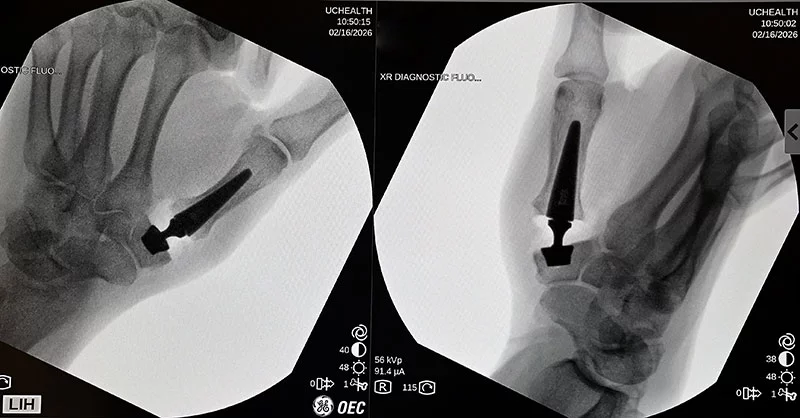
A new type of thumb arthritis surgery that uses a small prosthetic ball joint leads to better function, faster recovery and significantly less pain than traditional thumb arthroplasty surgeries, according to surgeons who have adopted the procedure.
Thumb arthritis — known as rhizarthrosis -- causes severe pain and grip weakness and is very common, affecting an estimated 7% of men and 15% of women. Until now, CMC arthroplasty was the go-to U.S. surgery to help with thumb arthritis. However, it typically results in significant pain for several weeks after the procedure and may lead to diminished thumb pinch strength and a slightly shorter thumb.
The traditional surgical approach involves removing the trapezium bone. The surgeon then sutures together a bundle of wrist tendons to fill the space and help cushion the thumb’s biggest bone, the first metacarpal.
In contrast, in this new surgical approach, surgeons embed a ball joint implant into the trapezium and the first metacarpal. According to surgeons, the innovative thumb prosthesis looks like a tiny hip replacement implant. European hand surgeons have been doing this type of thumb surgery since 2018, when the Swiss-designed implant was developed.
The U.S. Food and Drug Administration (FDA) gave conditional approval for the prosthesis for U.S. patients. earlier this year and numerous hospitals and orthopedic groups across the U.S. have undergone specialized training to be able to perform the procedure.
The new surgical approach is expected to give patients better function, faster recovery from surgery and reduced pain. The surgery itself involves less trauma and — by retaining the trapezium — there’s more underlying stability. Many patients leave the operating room with just an Ace bandage around the hand, as compared with being in a cast or a splint for six weeks with traditional thumb carpometacarpal (CMC) arthroplasty. Doctors report that most patients undergoing this new procedure are doing as well or better functionally at two-weeks post-op, than those who have had the traditional surgery are doing at six months.